Basilica and shrine
Check the official schedule and visitor information. Be mindful of services, quiet areas, and photography guidance.
Plan this stop ↗ RGV Guide.RIO GRANDE VALLEY · TEXAS
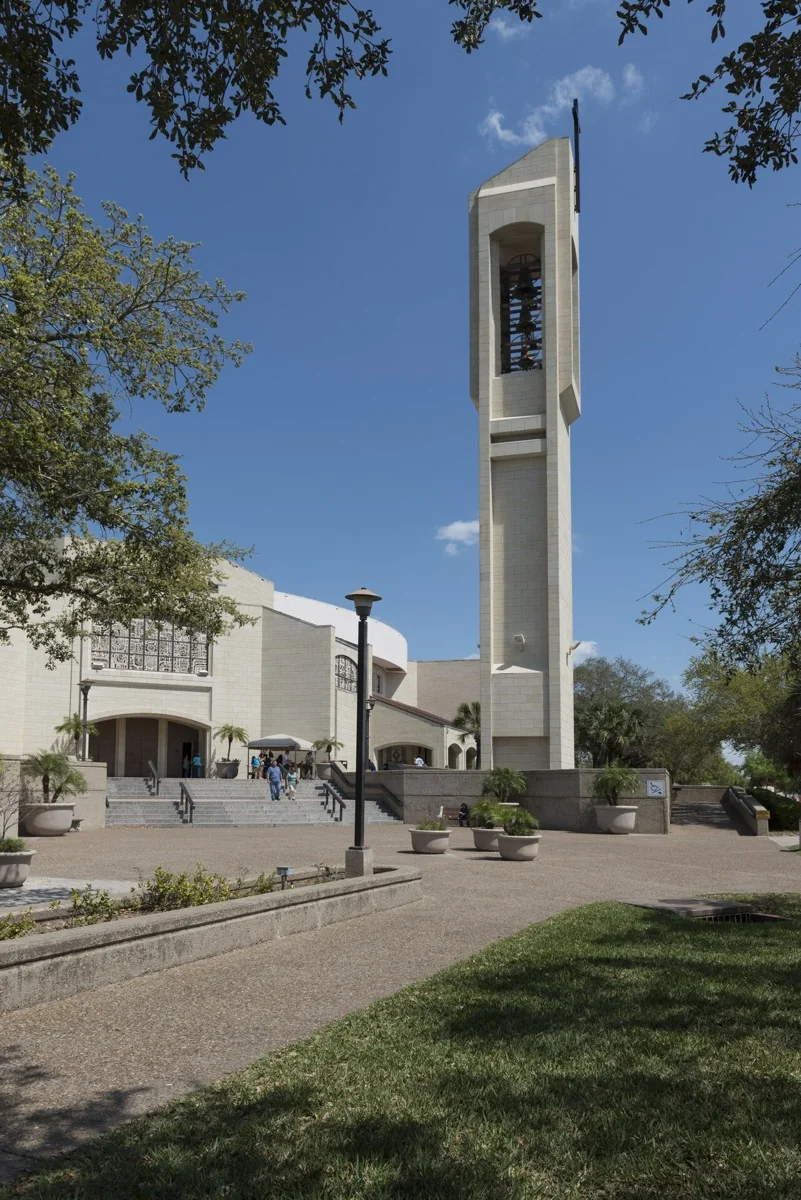
A place of pilgrimage
San Juan’s basilica is a major focal point for a visit, but it is first and foremost a living place of worship. Approach the grounds with time and consideration for the people who come to pray. A visit pairs naturally with nearby Pharr or Alamo, creating an outing that links faith, community, and the Valley landscape.
Find San Juan on the map ↗San Juan was organized in 1909 by John Closner on land with earlier Spanish-grant roots. It incorporated in 1917 and developed alongside agriculture and irrigation-related industry. The neighboring communities of Pharr, San Juan, and Alamo formed a shared school district in 1919.
The shrine became a major part of local life during the twentieth century. After the earlier building was destroyed in 1970, the community undertook a rebuilding effort; the new shrine was dedicated in 1980. Its continuing religious importance adds a distinctive dimension to a town that also shares the agricultural and commercial history of its neighbors.
Historical background: Handbook of Texas, Texas State Historical Association. Original RGV Guide summary.
Check the official schedule and visitor information. Be mindful of services, quiet areas, and photography guidance.
Plan this stop ↗Read how agriculture, irrigation, and the shrine shaped San Juan’s development.
Plan this stop ↗Follow a cultural visit with a separately planned nature outing south of Alamo.
Plan this stop →Check current hours, admission, accessibility, and any closures directly with each destination. Suggested outings are editorial ideas, not booked tours.